Meme Coin Trading, Lessons From a Top Trader
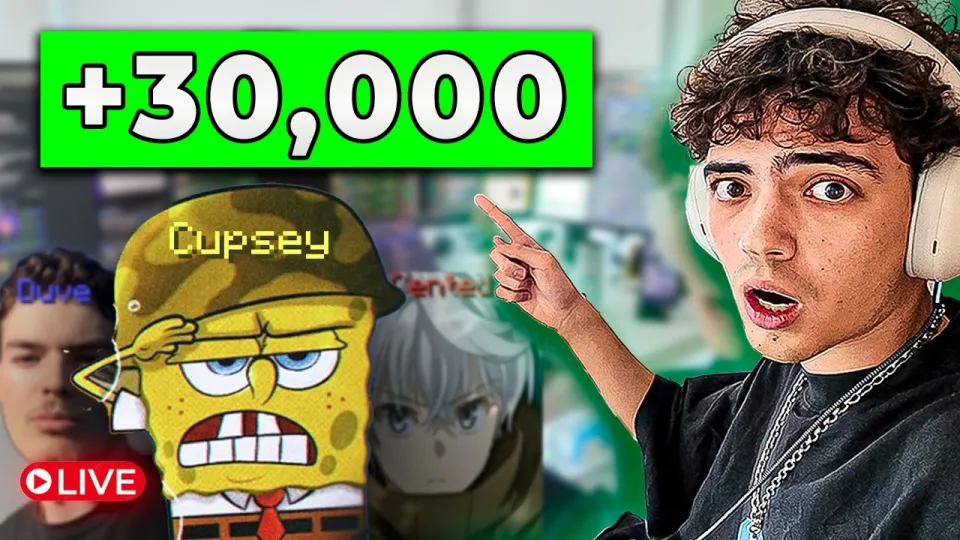
Video: I Traded With The World’s #1 Memecoin Trader
Want articles like this for your own video to promote it on YouTube and Google? Order them through the Telegram bot @sat_sit_bot. The bot writes and publishes the articles itself (with your YouTube video embedded) on popular topical websites (no ads). Free trial — 50 articles.
· based on the channel Ethan Prosper
A meme coin is a cryptocurrency with no cash flow, product or roadmap behind it — its price is driven purely by attention, liquidity and timing. Trading them profitably means treating them as a momentum instrument: entering early on new Solana pairs, sizing small, and exiting before liquidity rotates away. The Ethan Prosper video "I Traded With The World's #1 Memecoin Trader" is a useful case study of that approach, and you can watch the same terminal setup via the Padre trading terminal used in the session.
What a meme coin actually is and why it moves so fast
A meme coin is a token whose value rests on narrative and community rather than fundamentals, and that is exactly why its price curve is so violent. On launchpads like Pump.fun, anyone can mint a token on Solana in minutes, with liquidity added automatically and trading open immediately. There is no earnings report, no vesting schedule to model, no product milestone — only a bonding curve, a chart, and a crowd deciding in real time whether the joke is funny enough.
That structure produces three defining traits:
- Extreme reflexivity. Price is the marketing. A green candle attracts buyers, buyers attract more buyers, and the same loop runs in reverse on the way down.
- Thin, fast liquidity. Early pools hold thousands, not millions, of dollars, so a few hundred SOL of buying or selling can move the price double digits.
- Short half-life. Most launches peak within hours or days. The trade is a trade, not an investment thesis.
Understanding this matters because it reframes the whole activity. You are not valuing a business; you are pricing attention and execution speed.
Inside the session: what the numbers looked like
The video follows a live trading session between host Ethan Prosper and guest trader Cupsey, and the reported results are the headline. Across the run, the pair logged outcomes above 350 SOL, with individual highlights including roughly +200 SOL on early trades in Lobo and a token referred to as "1%", a +$15K result on an Elon/Grok-themed bot token, and about +80 SOL on a Mosaic AI coin. Smaller positions in a cheese-themed coin and a dev-linked "magic internet money" token filled out the session.
Two details make the video more useful than the profit screenshots. First, both Solana wallets were published — Ethan's at `sAdNbe1cKNMDqDsa4npB3TfL62T14uAo2MsUQfLvzLT` and Cupsey's at `2fg5QD1eD7rzNNCsvnhmXFm5hqNgwTTG8p7kQ6f3rx6f` — so entries and exits can be audited on-chain rather than taken on faith. Second, the trades are shown in sequence, which reveals the actual rhythm: many attempts, a handful of meaningful winners, and constant recycling of capital.
The mechanics top meme coin traders rely on
Meme coin trading at this level is an execution discipline, not a research process. The workflow in the session follows a repeatable pattern that anyone can study, even if few can replicate the speed.
- Launch monitoring. New pairs on Solana are watched as they are created, with filters for liquidity, holder distribution and dev wallet behaviour rather than chart patterns.
- Speed of entry. The edge is measured in seconds. Terminals such as Padre, BullX and Photon exist to compress the time between seeing a pair and buying it.
- Small initial size, asymmetric adds. First buys are sized so that a total loss is survivable; size increases only after the market confirms demand.
- Fast exits into strength. Profits are taken in tranches as buyers arrive, not held for a target price that may never come.
- Wallet hygiene. Separate wallets for sniping, holding and cashing out reduce exposure to a single compromised key or a flagged address.
Notice what is absent: no discounted cash flow, no multi-week thesis. The skill being demonstrated is reaction under uncertainty.
Why copying this style is harder than it looks
The most-liked critical comment under the video makes a fair point: these are speed traders who work 10+ hour days, and the same crowd is often accused of running multiple wallets to exit into retail flow. Both observations are worth taking seriously before anyone tries to mirror the strategy with a small balance.
Three structural disadvantages face a newcomer:
- Latency and tooling. Professional setups use custom scripts, low-latency RPC nodes and multiple terminals. A retail user clicking on a phone is minutes behind.
- Information asymmetry. Insider-adjacent wallets, dev wallet tracking and private groups surface candidates before they appear on public feeds.
- Capital to absorb losses. A trader who can lose 20 SOL on a failed snipe without flinching behaves very differently from someone whose entire stack is 2 SOL.
A widely upvoted comment in the thread says it plainly: you do not have to trade this way to win. Larger, more liquid coins, longer holding periods and slower decision cycles are legitimate alternatives that do not require competing on milliseconds.
Practical risk rules before you ape anything
Risk control is the only part of meme coin trading that is fully within your control, so it deserves more attention than entry tactics. A workable framework:
- Cap total exposure. Decide in advance what percentage of your portfolio can go to high-risk launches — many experienced traders keep it under 10%.
- Size per trade, not per conviction. If a single position can wipe out a week of gains, it is too large regardless of how good the narrative looks.
- Check the contract before buying. Verify mint authority is revoked, liquidity is locked or burned where applicable, and top holders are not a single cluster of fresh wallets.
- Pre-plan the exit. Decide at what multiple you sell the first tranche and stick to it; the failure mode is always holding for "one more candle".
- Expect most trades to fail. The session's results came from a handful of outsized winners inside a much larger number of attempts.
None of this removes the risk. Meme coins can and do go to zero within minutes, and no terminal, Discord group or copy-trading feature changes that.
Common questions traders ask after watching
Viewers consistently raise the same doubts, and they are the right ones to ask. How much capital is needed to start? Realistically, enough to place several small positions without emotional pressure — a few hundred dollars works for learning, though it will not produce the session's numbers. What does "faucet" mean in this context? It refers to a source of fresh capital or wallet funding that keeps a trader able to keep firing at new pairs.
Is copy trading a shortcut? Partially. Tools that mirror a wallet's buys execute after the original transaction, which means a worse entry price and, in thin markets, a materially worse outcome. And should beginners trade new pairs at all? A reasonable path is to study the mechanics on liquid tokens first, then move to launches with money you are prepared to lose entirely.
Useful links
- Padre trading terminal — registration and trading access
- Ethan Prosper's link hub
- Cupsey on X
- SOLMAFIA free Discord
- Pastel paid community
Final takeaway
The session is a clear demonstration of what elite meme coin trading looks like: fast entries on Solana launches, small initial size, rapid profit-taking, and a tolerance for many losing attempts in exchange for a few large winners. It is also a demonstration of why the style is close to a full-time job — the reported 350+ SOL came from speed, tooling and capital that most participants do not have. Treat the video as a map of the mechanics, not a promise of returns, and start with risk rules rather than with a sniper bot. The breakdown was produced by the Ethan Prosper channel; if the format is useful, register on the terminal and paper-trade the workflow before committing real capital.
Key takeaways
- A single session on the Ethan Prosper channel with guest trader Cupsey produced reported results above 350 SOL, including a +$15K trade on a Grok-themed token.
- Meme coin trading is speed trading: entries happen in the first minutes of a new pair, and edge comes from execution speed, not from long research.
- Two public Solana wallets were shared in the video, which lets anyone audit entries and exits after the fact.
- Tools mentioned include the Padre terminal, Pump.fun launches, and Solana-based trading terminals built for sniping new pairs.
- The most-liked critical comment argues that top traders multi-wallet and profit from slower retail buyers — a structural risk to understand before copying.
Questions & answers
How much money do you need to start trading meme coins?
Enough to make several small positions without emotional pressure — a few hundred dollars is a common starting point for learning the mechanics. The results shown in top-trader sessions come from much larger capital and dozens of attempts, so they are not a realistic benchmark for a small account.
Is copy trading a top meme coin wallet profitable?
It can reduce research time but rarely reproduces the original returns. Copy tools execute after the source wallet's transaction, so you get a worse entry, and in thin early liquidity that gap can be the difference between profit and loss. Many top traders also rotate wallets frequently, which breaks copying entirely.
What tools do professional meme coin traders use?
They rely on Solana trading terminals such as Padre, BullX and Photon for fast execution, plus launch monitors, holder and dev-wallet analytics, and low-latency RPC access. Speed of execution and wallet hygiene matter more than chart indicators at this level.
Are meme coins a good investment for beginners?
They are a high-risk trading instrument, not an investment in the traditional sense, since there is no cash flow or product behind them. Beginners are usually better served studying the mechanics on liquid assets first and capping exposure to launches at a small share of their portfolio.
Source: I Traded With The World’s #1 Memecoin Trader · Markdown version